Trending
89/100
Monthly searches
0
Assets tracked
0
Last checked
Oct 14, 2026
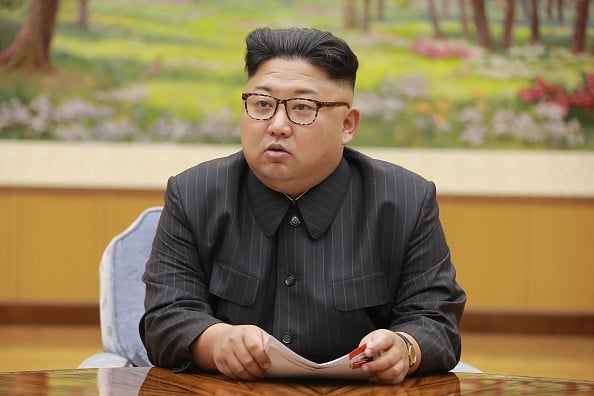
Kim Jong-un is the third generation of the Kim family dynasty to lead North Korea, assuming the role of Supreme Leader following the death of his father, Kim Jong-il, in December 2011. Born in Pyongyang, his early life was largely kept out of the public eye. He attended schools in Switzerland under a pseudonym during the late 1990s, where he was reportedly influenced by Western culture and sports before returning to North Korea to continue his education at the Kim Il-sung Military University.
Following his ascension to power, Kim Jong-un rapidly consolidated his control over the Workers' Party of Korea and the state military. His leadership is marked by a dual-track policy known as byungjin, which focuses on the simultaneous development of the nation's nuclear weapons arsenal and the economic improvement of the country. He has engaged in periodic diplomatic outreach, including historic summits with leaders from South Korea, China, and the United States, seeking to leverage his nuclear capability for international recognition.
His administration has been characterized by significant geopolitical tension and persistent international scrutiny regarding human rights and proliferation activities. Internally, Kim has implemented various structural changes to party governance, emphasizing his absolute authority. Despite frequent international sanctions aimed at restricting North Korea's access to global markets and capital, his administration continues to prioritize the advancement of ballistic missile technology as a cornerstone of state sovereignty.
In recent years, Kim has focused on tightening ideological control while managing the economic pressures intensified by the global pandemic and localized natural disasters. His reported wealth, often estimated by international observers in the billions, is tied to the centralized command economy and the clandestine networks operated by the Office 39 of the Workers' Party. As of his current standing, he remains one of the most guarded and controversial figures in global politics, maintaining a rigid hold on domestic policy.
Kim Jong-un's influence on the Korean Peninsula remains profound, as he continues to resist external pressures for total denuclearization. His governance reflects a strategic calculation to ensure regime survival at any cost. By prioritizing military modernization, he has successfully cemented his status as the unchallenged architect of the modern North Korean state, navigating internal political dynamics and external geopolitical alliances with a strategy defined by defiance and autarky.
2010
Public Debut and Military Promotion
Kim Jong-un was promoted to the rank of four-star general and appointed vice-chairman of the Central Military Commission, marking his official debut as heir apparent.
2011
Assumption of Supreme Command
Following the death of his father, Kim Jong-il, he was declared the Supreme Commander of the Korean People's Army.
2012
Elevation to Top Leadership Roles
He formally assumed leadership of the ruling Workers' Party of Korea as First Secretary and became Chairman of the National Defense Commission.
2018
First US-North Korea Summit
Kim Jong-un met with US President Donald Trump in Singapore, marking the first-ever summit between leaders of the two nations.
2021
Election as General Secretary
He was elected as the General Secretary of the Workers' Party of Korea, restoring the title previously held by his father and grandfather.
2023
Summit with Vladimir Putin in Russia
Kim Jong-un traveled to Russia's Far East to meet with President Vladimir Putin, deepening bilateral military and strategic cooperation.
You may also like
Level up